6 Comments

long and winding road

free vector 07Having  traded in the pavement-pounding crowds of New York for the freeway-clogging crowds of LA just about 17 years ago, I have to admit that the whole LA driving scene continues to surprise me. It’s such a big part of life out here that it deserves its own zip code. Maybe 9-0-2-1-0MG.  To wit:

In LA, it’s a matter of pride as to who has the worst freeway commute. “You take the 405? That’s nothing. I have to deal with the 10 — it takes me 2 hours each way. And it’s only 9 miles!” And exactly why would I want to top that?

Angelenos love to argue over who has to deal with the worst intersection. It’s like a badge of honor. (For years, I commuted to work in Brentwood, and I can say, with all confidence, that the intersection of Wilshire and Sepulveda is the worst, bar none; in fact, I think there’s some poor schmuck from back then still waiting to make that left.)

Ask an Angeleno for the cross streets of a specific venue, and you’ll get — I don’t know what. It’s a foreign concept out here. A New Yorker will tell you that something is “on Third between 44th and 45th, east side of the street, about halfway up.” Here you’ll get “on Third Street between Highland and Fairfax across from Starbucks” — except that there are numerous streets (and probably no less than 47 Starbucks) between the two.

LA sports fans are notorious for showing up late to sporting events due to traffic (here’s an idea — how about leaving home earlier to get to the game on time?). Laker game? The seats don’t fill until about ten minutes into the first quarter. Dodger Stadium? We’re talking third inning. And then everyone leaves early to avoid traffic (those pesky freeways and intersections). You wouldn’t even dream of pulling that kind of stuff in Boston or Philly or New York. The fans would boo. And then they’d spill their beer on your head.

Baby, you can drive my car.  Just not in LA.

© 2013 Claudia Grossman

Leave a comment

eye on the ball

As this year’s World Series winds down to its final game or two, and the boys of summer and the Mr. Octobers walk off into the sunset for another season, America’s favorite pastime leaves the diamond until next spring.

I, for one, love the romance of baseball — but some of the rules of the game stymie me. Of course I understand how the game is played — but not some of the details like tagging up vs. tagging a player, those backward Ks, when a foul counts as a strike, designated hitter vs. none, yada, yada, yada. (And don’t even get me started on trying to figure out if a 90 mph pitch is in or out of the strike zone — it’s going too fast for me to see.)

SAMSUNGBut sitting in the ballpark on a not-too-hot day, sipping a beer, wearing my Dodgers cap (okay, it’s black and pink, but it still counts) and waiting for that sound of the bat that tells you the ball is outta here — I’m happy.

To me, there’s still an innocence to baseball (cue the hot dogs, apple pies and Chevrolets) that doping scandals haven’t destroyed. An innocence best portrayed by me, at one of the first Dodger games B. took me to.

There we were, sitting in loge seats on the third base side. I was like a kid, not knowing where to look first, totally enjoying being taken out to the ballgame. I was also chattering a mile a minute — asking questions, commenting on uniform colors, wondering how the peanuts guy managed to toss those bags to fans rows and rows away, snapping selfies of B. and me. The 03-03_thumbonly thing I wasn’t doing, apparently, was paying attention to the ball. (Not as oblivious as Katharine Hepburn in Woman of the Year, but close.)

Our seats (I found out later) put us in foul ball territory for left-handed hitters. I, having no idea, continued to chatter (yakking and talking, talking and yakking, as B. puts it) as balls were hit (balls flying everywhere, according to him). Once or twice, he even stuck his hand in front of my face. “What?” I asked. “Hey — I can’t see the game or the scoreboard with those backward Ks, or the screen or –” B. grabbed my face and kissed me (apparently there was a break in the onfield action). “It’s ok,” I told him. “I forgive you for blocking my view.”

“No, honey,” he told me patiently. “I was just trying to get you to shut up for a minute. There are balls flying by everywhere and you’re not paying attention. I’m trying to protect you from getting hit in the head.”

Oh. Good point. As a result,  I was terrified of being hit by a leftie every time we went to a game. Until B. figured out a solution.

For my next birthday, he got me my very own baseball glove (no, it’s not pink). So even though I may not catch on to all the technicalities of the game, I have a good chance of not catching a ball in my teeth.

Safe.

© 2013 Claudia Grossman

4 Comments

up on the roof

Dear Guy on the Roof:

I’m sorry if our trying to sleep (in the apartment just below where you are hanging out on the roof with your date at 2 a.m.) is intruding on your privacy, but I can’t help but overhear every word you are saying in full voice (as well as the clomping of your footsteps on the gravel rooftop and the banging of the roof door that woke me).

Because I am a captive audience (if I cover my head with a pillow you sound like the trombone-voiced grown-ups in the Charlie Brown specials — even more annoying than hearing your voice), I can’t help but offer a critique on your technique.

A few items:

1.  Your rap about having a screenplay that your agent is this close to getting greenlighted by the studio. Seriously? Do women still fall for that line? Give it a rest.

2. Telling your date that if it were a clearer night, you could point out all the constellations to her. A couple of things here. First, this is LA. It’s never clear enough to see a sky full of stars. And second, there are no constellations named Sleepy, Sneezy and Bashful. The fact that your date believes you makes her Dopey. The whole thing makes me Grumpy.

3. Your topics. Here are some things I don’t want to hear you pontificate about — sex, your ex, your pecs. Zip it.

4. Your socializing on the roof in the middle of a work night. This is a roof, not a Starbucks. It is unlit, unpaved and unbelievably crowded with air conditioner units and satellite dishes. It is not the Empire State Building observation deck. You are not Cary Grant or Tom Hanks. I, however, am sleepless in LA — with an early-morning deadline.

5. Your singing. I’m sorry, but again with the “nots.” You are not John Mayer. You are not Jason Mraz. You are not Jim Morrison (don’t even think about asking me who he is). What you are is Just Mediocre. Save it for karaoke night. Inside a bar.

6. Your stomping around up there. There are only three times I want to hear any kind of action on the roof — a) if Tom Cruise is shooting the latest MI there; b) if Harrison Ford is filming anything there; c) if a fat, jolly man in a red suit with a bunch of reindeer has landed there. (And if you are that last guy, a pair of noise-cancelling headphones would make a great holiday gift — thanks.)

Speaking (quietly) of the holidays, I’ve got two words for you. Silent night.

© 2013 Claudia Grossman

1 Comment

tell-tail heart

I love to do dog voices. Seriously. I became proficient putting voice to a dog’s thoughts (that is, my best guess at those thoughts) with our dog, Ilsa, an Aussie-spaniel mix who was incredibly smart and loving. And although Ilsa was female, I’d express her thoughts in a gruff Brooklyn-accented voice — sort of like a New York cab driver (or long-disgruntled Dodgers fan — “da bums left New York!”) crossed with Ralph Cramden (kind of the same thing).

Some examples. Ilsa watching me clean up after dinner — “You gonna eat that? I could eat that.” Ilsa’s response when called — “Hey, I’m busy sleepin’ here.” And the classic response to “Want to go out, Ilsa?” — “Uh, yeah. It’s not like I can take myself down in the elevator.”

I’ve managed to expand my repertoire from Ilsa to other dogs I know or meet. A chance encounter with a neighborhood lab might result in, “Yeah, you can pet me. A little to the left, if you don’t mind.” Petting a friend’s Golden Doodle — “That’s good, that’s good. Why are you stopping? What do you mean you have other things to do?” And, finally, the little Yorkie skittering down the street — “Don’t step on me. I’ll hurt you. Bad. I may be little but I can take you.”

But the dog voice that gets me every time is the one B. “heard” when he first saw Ilsa at the animal shelter (a few years before he and I became a “we”).  “She just looked up at me and I knew she was thinking, ‘I’m good. Take me. I’m good,'” he told me.

She was. He did. Fairy tail ending.

‘Woof said.


© 2013 Claudia Grossman

1 Comment

baby and the blouse man

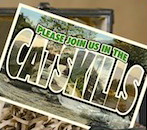
catskillsMany, many movies capture the essence of growing up in New York. Many capture the New York Jewish experience perfectly. And a few go so far as to bring to life a part of that experience that flourished in the ’50s and ’60s in a place known as the Catskills.

Some background:  Located a couple of hours, give or take, from New York City, the Catskill Mountains in those years offered a summer haven for lots of Jewish families from Brooklyn and the Bronx. A family would typically rent a tiny cottage in a “bungalow community” for the entire summer, with the father coming up from the city for weekends, or would stay for a week or so at one of the area’s then-enchanting hotels — like the Nevele, the Concord, or Grossinger’s.

Two of my favorite movies take on these summers as their setting — with characters as real (and annoying) as someone’s cousin Ira or someone else’s little sister Rhonda — Dirty Dancing and A Walk on the Moon.

If you’re one of the five people on earth who hasn’t seen Dirty Dancing, it takes place in the early ’60s and centers on 16-year-old Frances “Baby” Houseman (an adorable Jennifer Grey), the youngest daughter of a well-to-do doctor, who spends a week or so with her family at Kellerman’s (a fictitious Catskill resort). There she learns about love — and about the mambo — from dance instructor Johnny Castle (an über-sexy Patrick Swayze), who comes from the other side of the tracks. Baby is brave and outspoken (fighting social injustice in her too-cute little peasant blouses and white Keds). So much so that, in the movie’s final scene, Johnny announces, “Nobody puts Baby in the corner!” as he leads her up to the stage to dance. (Really. It’s the resort’s end-of-summer talent show. I kid you not.)

A Walk on the Moon takes place later in the decade, during the summer of ’69 (we’re talking moon landing, Woodstock, and sexual awakening). The main character, Pearl (Diane Lane) is married to Marty (Liev Schreiber), a TV repairman from Brooklyn. The two take their kids and his mom with them to a bungalow for the summer, where Pearl begins to long for what she thinks she missed out on by getting pregnant and marrying very young. Enter the Blouse Man (again, I kid you not), a hippie salesman who visits the bungalow colony each week in his bus, selling blouses, t-shirts, jewelry — and a kind of sexual healing that Pearl just cannot resist. In the end, it all works out — not the least reason being Marty’s mother, who asks Pearl point blank, “You’re shtupping the Blouse Man, Pearlie?”

Shtupping the Blouse Man. Immortal words that could only be uttered in the one place that understood what “shtupping” meant (it means exactly what it sounds like) and who the Blouse Man was.  That same one and only place that nice Jewish girl Baby and blue-collar, leather-jacketed  Johnny Castle — complete opposites — could ever meet and mambo into love.

A place where oy meets girl.

© 2013 Claudia Grossman

4 Comments

don’t take any shirt from anyone

logoThe numbers are awful. One in four women will be the victim of domestic violence in her lifetime. That means if your book group includes seven other women, two of them might suffer. If you’ve got three besties, one of the four of you could end up seriously hurt or worse. And your daughter’s cheerleading squad of 12? You do the math.

Why then, when domestic violence is so prevalent, are women so okay with calling a popular piece of clothing a “wife beater”?

You know the piece I mean. It’s a man’s sleeveless, tight, white ribbed undershirt, also known as an A-shirt or muscle shirt. It looks great on men who are in shape and sexy on women who wear it with cut-offs or jeans. It’s not the garment I have the problem with. It’s the name.

Because the shirt is so often found on macho, violent characters in movies and books, it’s become associated with that “type” of man — often a rough, uneducated brute who kicks the dog and gives his wife a black eye when his dinner isn’t on the table on time. In short, a wife beater. The man and, as a result, the shirt.

Bad, right? But you know what’s worse? The fact that women — young women, especially — have no problem in referring to the shirt by this name. I’ve been to photo shoots where the direction is to “put the model in the wife beater;” I’ve heard a friend’s teenage daughter say that she was going to wear a “wife beater” to school once the weather warmed up; and I’ve seen young-women’s mags mention “wife beaters” in their fashion section as a way to look hot.

I’ve got to believe that all these girls and women aren’t thinking about what they’re saying. Not realizing how demeaning the name “wife beater” is. Not comprehending that the name speaks ill of any man who might wear the shirt, to say nothing of sending a message that wife beating is so unimportant that trivializing it as the name of an undershirt is okay.

Hey, it’s not okay. Find another name for the shirt. Pay more attention to the words. Be prouder and more protective of being a woman. And never let anyone minimize how important you are.

Put that on your t-shirt.

© 2013 Claudia Grossman

3 Comments

breaking bread with bernie

Retro-Images-Picnic-GraphicsFairy-839x1024Whenever I make a sandwich on rye bread, I think of my father-in-law, Bernie. Why rye? Because one of my husband’s nicest growing-up memories is of he and his dad stopping at the bakery to pick up the loaf of fresh-baked rye bread that his mom had asked for — and then managing to eat most of it before getting home. I love that story. I loved Bernie too.

Bernie was an absolute gentleman. And a gentle man. Courtly, thoughtful, kind, understated — but with a wickedly wry sense of humor. (Look at that — rye and wry.) I lost my own dad early in my life, and Bernie became a dad-in-law in every sense of the word.

In fact, Bernie and I were allies. My husband and his mom are both very charismatic; very animated; and very not shy about giving an opinion, talking over each other, and being center stage. It’s all adorable — until it goes on for about 20 minutes. And that’s when having an ally to roll eyes with is kind of cool.

There’s more. Neither Bernie nor I ate seafood. Except we both loved tuna on rye (there’s that rye thing again). Take us to a deli and what would we both order? Corned beef on rye. And don’t forget the Dr. Brown’s (cel-ray for him, cream for me).

Unfortunately, I only knew Bernie for a few years before he passed, although it felt like I’d always known him. There is a bittersweet moment with him that I’ll never forget. I hadn’t seen him for a couple of months, and he was in a nursing home, somewhat frail and no longer aware of many things. But that didn’t stop him. Gentleman that he was, he managed to stand up from his wheelchair to greet me with a huge hug. I’ve never been more flattered in my life.

You’ve got to love a man who loves to act like a kid — by sharing a rye bread with his own kid and bringing home just a few remaining slices as if nothing was out of the ordinary. Or who wears a football helmet around the 22383314_225x225house for no reason. Or who waggles his eyebrows at his own wife in romantic playfulness.

That’s the kind of man I’d share a sandwich — and my heart with — any time.  Like father, like son.

© 2013 Claudia Grossman

1 Comment

valley of the dolls

Unknown-3Among my many talents is the ability to do a mean Valley Girl imitation. (I also do a pretty good New York cabbie impression and a dead-on Jerry Lewis “Hey, Lady!” that cracks B. up every time.) I’m one of those native New Yorkers who has been blessed not to have very much of an accent (though the errant added “r” has been known to come out once in a while). But for someone who has had to deal with meeting non-New Yorkers who love to say, “Oh, you’re from New Yawk?” and think they’re being so clever, I’ve got a couple of words for you: Don’t even.

So now I feel it’s only fair for me to have the chance to dish it out too. Playfully. Sweetly. And, above all, with stiletto (Louboutin, of course) precision. So, like, okay?

I can report from home here in LA that Valley Girl is still alive and well and she still ends all her sentences like a question?  She’s got her own language that’s a culture (shock) unto itself.  For example, here’s how she might describe the movie Legally Blonde (the main character, Elle, could be one of her best friends):

I was like so excited when Elle followed her boyfriend to Harvard — it was so totally amazing! But then when she unknown-1found he was already engaged to that other girl, I was like all, “Shut up!” So lame, for sure.  I mean, “What. Ever.” But then Elle got a new boyfriend who was way better than that other dude. That first guy was such a total poser. Her new boyfriend is a major hunk. Like seriously. And they’re engaged! OMG — I can’t even believe it.  And now her first boyfriend wants her back. As if. Duh.

I ran into a real modern-day Valley Girl a couple of weeks ago at the supermarket. To her credit, she was working, bagging groceries. She was in the midst of telling the cashier about her boyfriend, “And then he called me and he was all, ‘So where do you want to go tonight?’ And I was all, ‘I don’t know.’ And he was all,  ‘I’ll call you later.’  And I was all…'” At this point, she was distracted by the cover of a magazine I was buying. One of the cover lines read, “See inside for this season’s must-have haircut!” So she did. Literally. Stopped bagging, leafed through the magazine, took note of the haircut and said, “I totally had to look — it’s like so awesome?” Once done looking, she figured she might want to totally get back to work. But she had just one question.

“Which foods do you want me to put in the frozen-foods bag?

Oh, I don’t know. The frozen ones?

Duh.

© 2013 Claudia Grossman

1 Comment

bosom buddies

buddiesWhile watching the Emmy Awards this past Sunday night, a few things occurred to me — a) Jon Hamm was wrongfully passed over yet again as the dark, damaged, devastatingly disarming Don Draper (although I have to admit that I love Jeff Daniels as Will McAvoy in Newsroom; in fact, he could almost make me think about voting for his kind of Republican — almost); 2) a little too much with the memorials (is it just me, or do you find yourself saying every year as you watch this kind of segment, “I didn’t know he / she died!”); 3) and lastly, but really important here, people, Tina Fey and Amy Poehler were the best part of the show; in fact, they’re usually the best part of any show they’re in together. (I crack up any time I think of their Sarah Palin / Katie Couric SNL skit.)

The whole idea of a couple of women taking the stage or screen together, playing off each other, and being so good at it isn’t new. But it’s always great to see. Like these other women “buddy” duos who put their dazzle, their talents, and their smarts together to do good.

Lucy & Ethel (Lucille Ball & Vivian Vance). Of course. The Wonder Women of women buddies. Chocolate factory, anyone?

Thelma & Louise (Geena Davis & Susan Sarandon). Without a doubt. Maybe not as funny as Lucy and Ethel, but clearly these two let nothing stand in their way (not even a little thing called the Grand Canyon).

LaVerne &  Shirley (Penny Marshall & Cindy Williams). Think Lucy and Ethel without the common sense of Ricky and Fred to rein them in (like that ever made a difference). Probably the only two females immune to Fonzie’s charms. (And is it just me, again, or does Cindy Williams as Shirley remind you of Zooey Deschanel?)

Mary & Rhoda (Mary Tyler Moore & Valerie Harper). They turned the world on with their smiles — and their terrific friendship. Whether it was Mary standing up to Mr. Grant or Rhoda searching for Mr. Right, these two had each other’s backs. My compliments to this perfect complement.

CC & Hillary (Bette Midler & Barbara Hershey). Okay all you closet Beaches fans, this one’s for you. Admit it, this unlikely duo made you laugh, made you cry, and made you want to call your best friend once the movie was over. I mean, come on, that ending where Hillary’s daughter goes to live with CC … sorry, got a tissue?

Rizzoli & Isles (Angie Harmon & Sasha Alexander) Brainy, beautiful detective and even brainier, beautiful medical examiner take on Boston crime. These two are way smart — as well as appropriately smart-ass. Plus Isles has a to-die-for wardrobe and Rizzoli has crazy-good hair. (What? These things are important too.)

Which brings me back to Tina and Amy.  Please star in another movie together — Baby Mama was too long ago. Or please, please sign on to host the next Golden Globes as a team like you did this past year. Or, maybe … politics?

Just two funny.

© 2013 Claudia Grossman

1 Comment

i heart moon river

One of my favorite episodes of Sex and the City is I Heart NY, in which the love of Carrie’s life, Mr. Big, is imagesabout to move away to Napa, leaving her nostalgic for their time together in the city they both love so much. The episode, which aired in February of 2002, is a valentine to New York — a love letter dedicated to the city just months after the heartbreak of 9/11.

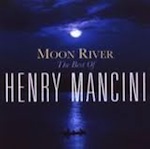
Early in the episode, Big plays a record (remember those?) of Moon River for Carrie and dances with her in his now-empty apartment. He tells her that he remembers his parents dancing to that song when he was a kid, and, although she finds it kind of corny, that memory truly touched my heart (all right, I’m closer to his age than to hers). I have the same memory of my own parents — and of that time of early 1960s suburban innocence. Before Camelot came apart.

But while our parents (mine, Big’s, my friends’) danced to Henry Mancini, the generation who came of age in the 1960s (the early wave of Baby Boomers) made their own soundtrack. Theirs was the music that fueled protests and demanded attention, that had Bob Dylan and Joan Baez as its prophets, and Jimi Hendrix and Janis Joplin as its preachers.

For the Baby-er Boomers like me, born toward the end of the postwar wave, we heard the music but were too young at the time to live it. We were too young for a lot of things — Woodstock, the draft, and the fears that kept our parents up at night (if we’d known that those air-raid drills were supposed to protect us from nuclear holocaust, we would have been terrified instead of glad for a chance to get out of the classroom and into the school hallway — “curl up against the wall, cover your head with your hands!”).

Maybe we can’t blame our parents too much for listening to Moon River on the hi-fi (remember those?) and for embracing their suburban dreams. Those dreams were their haven from the decade’s turbulence — and a safeguard, real or imagined, from a world going a bit mad.  I have to admit that, although the song is somewhat schmaltzy for my taste, I’ll always remember how watching my parents dance to it (and to lots of other ’60s suburban easy-listening classics) made it seem like everything was going to be ok.

A very Big deal, my huckleberry friends.

© 2013 Claudia Grossman